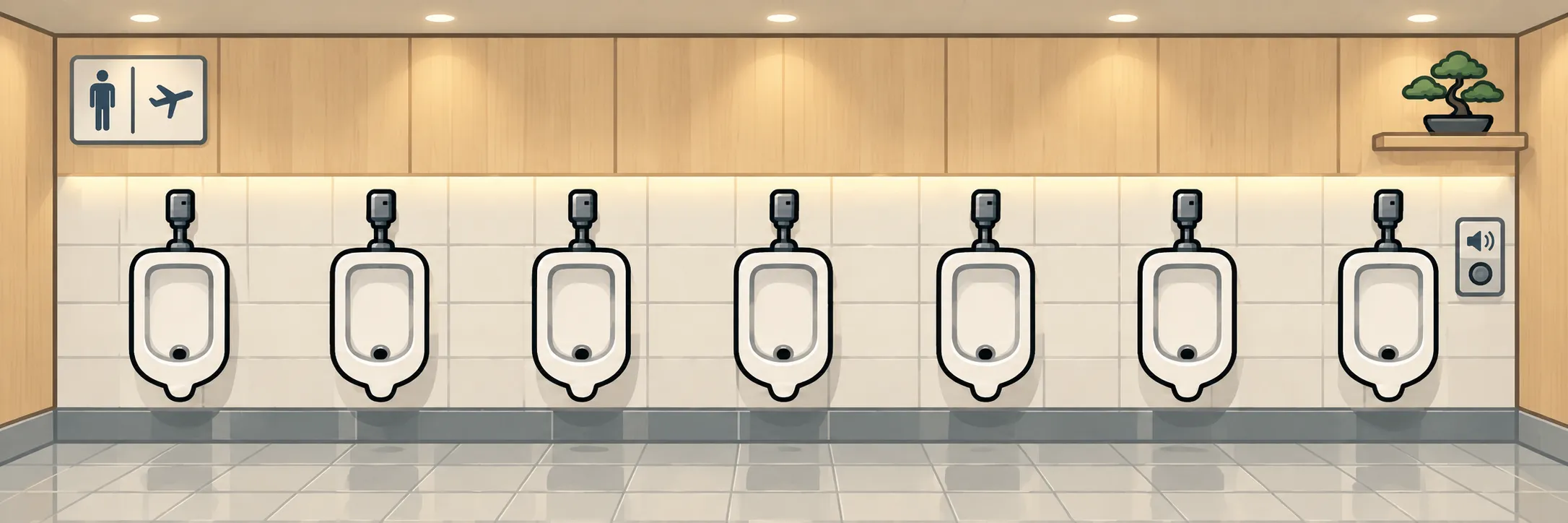
The Schiphol urinal fly: the true story (and the myth of 80%)
Amsterdam Schiphol etched a fly into its urinals in the early 1990s. Who came up with it, whether it really cut spillage by 80%, and why economists love it.
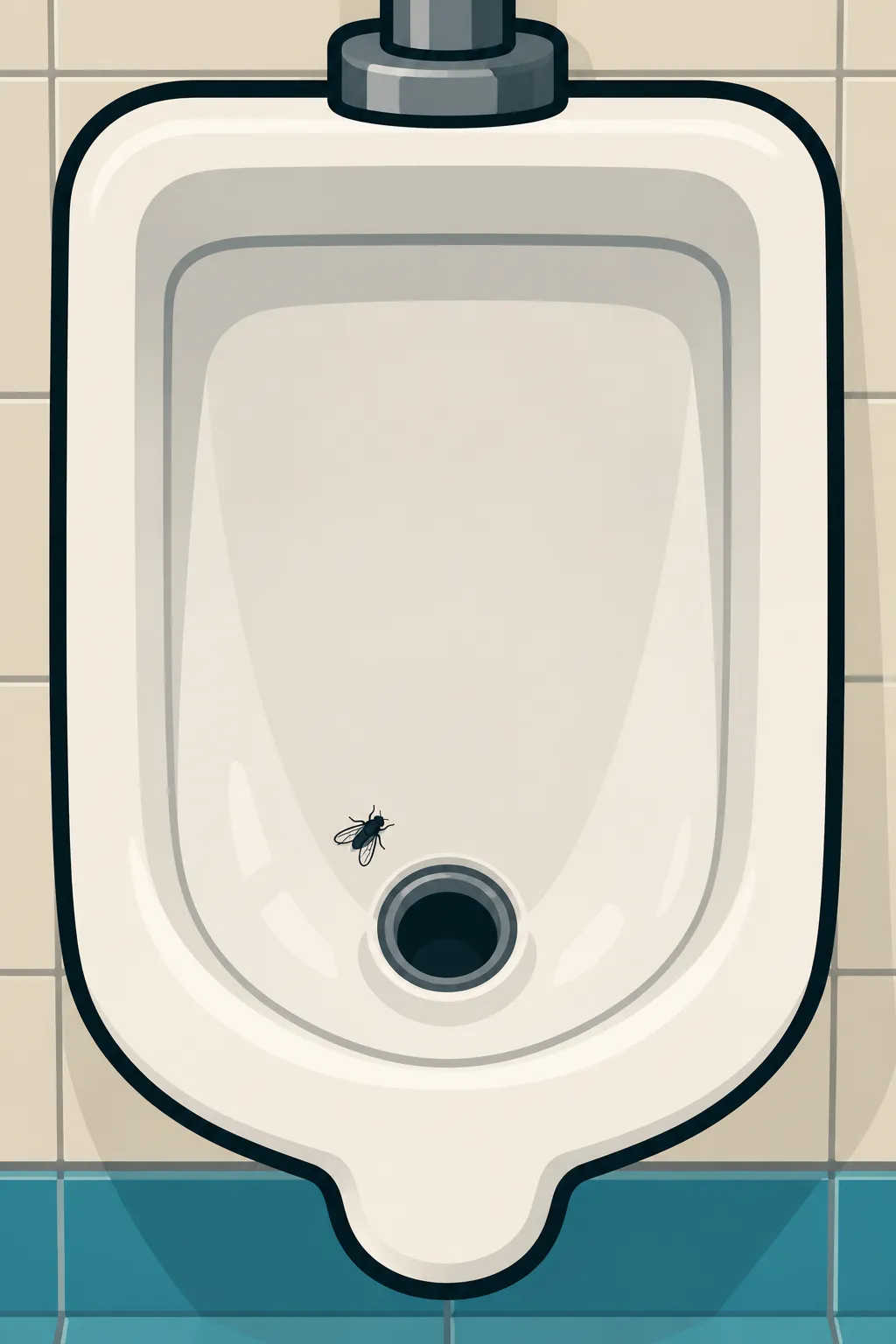
Somewhere in Amsterdam Schiphol, a man is standing at a urinal trying very hard to hit a fly. The fly is not real. It never was. It has been there since the early 1990s, and it may be the most successful piece of design in any airport, anywhere.
Who put it there
The idea is credited to Jos van Bedaf, who managed Schiphol’s cleaning department. He remembered a small target painted in a urinal during his army service in the 1960s. Aad Kieboom, who ran terminal extensions and renovations, championed it with management. Kieboom often gets the credit in articles, but he has said himself that it was Van Bedaf’s idea.
Why a fly? According to the story, because it’s the thing men most want to pee on.
The fly sits in the same spot in every urinal: just above the drain, slightly to the left. That is the clever bit. Aim at it and you are automatically hitting a spot, at an angle, that splashes less.
The 80% myth
You will read everywhere that the fly cut spillage by 80%. Be careful with that number.
- It came from airport staff, not a study. Kieboom called it “very empirical”.
- When the design magazine Works That Work looked for the research behind it in 2013, there wasn’t any, and Kieboom said he had never known of one.
- He reportedly said the real figure was probably nearer 50%.
- A related claim, an 8% cut in the toilet-cleaning budget, was itself worked out from the 80%.
So: the fly almost certainly helps. Nobody has measured how much.
The most famous nudge in the world
In 2008 Richard Thaler and Cass Sunstein used the Schiphol fly as an example in Nudge, their book about steering behaviour without rules or bans. Thaler went on to win the Nobel Prize in economics in 2017, and the fly went on to appear in roughly every behavioural-economics slideshow ever made.
Targets weren’t new, mind you. Victorian urinals had bees painted in them, and there are patents for urinal targets from the 1950s and 1970s. Schiphol just made it famous.
Schiphol’s toilets today
According to the airport’s own news site, many Schiphol toilets now have sensors that predict when cleaning is needed, and every toilet has a feedback console where travellers rate their visit. Enough bad ratings and a cleaner is sent straight away. Rate generously; someone is watching the numbers.
While you’re in Amsterdam
The city has its own urinal icon: the plaskrul or “pee curl”, a cast-iron spiral street urinal from the late 19th century. The top half is perforated so you can see whether it’s occupied. Dozens survive, though the city is slowly replacing them with toilets everyone can use.
Schiphol is the first airport in Urinal Rules Forever. Yes, the fly is in the game.
Quick answers
Why is there a fly in the urinal at Schiphol?
It is a target. Men instinctively aim at it, and because it sits just above the drain, it nudges them into an angle that splashes less.
Did the urinal fly really reduce spillage by 80%?
The 80% figure was an estimate by airport staff, never a published study. The man who popularised it later suggested the real effect was probably closer to 50%.
Who invented the urinal fly?
The idea is credited to Jos van Bedaf, who ran Schiphol’s cleaning department. Aad Kieboom pushed it through and often gets the credit, but has said it was Van Bedaf’s idea.
Sources