The 1976 study that timed men at the urinal
In 1976 psychologists timed how long men took to start peeing when a stranger stood next to them. What they found, and why it still matters.
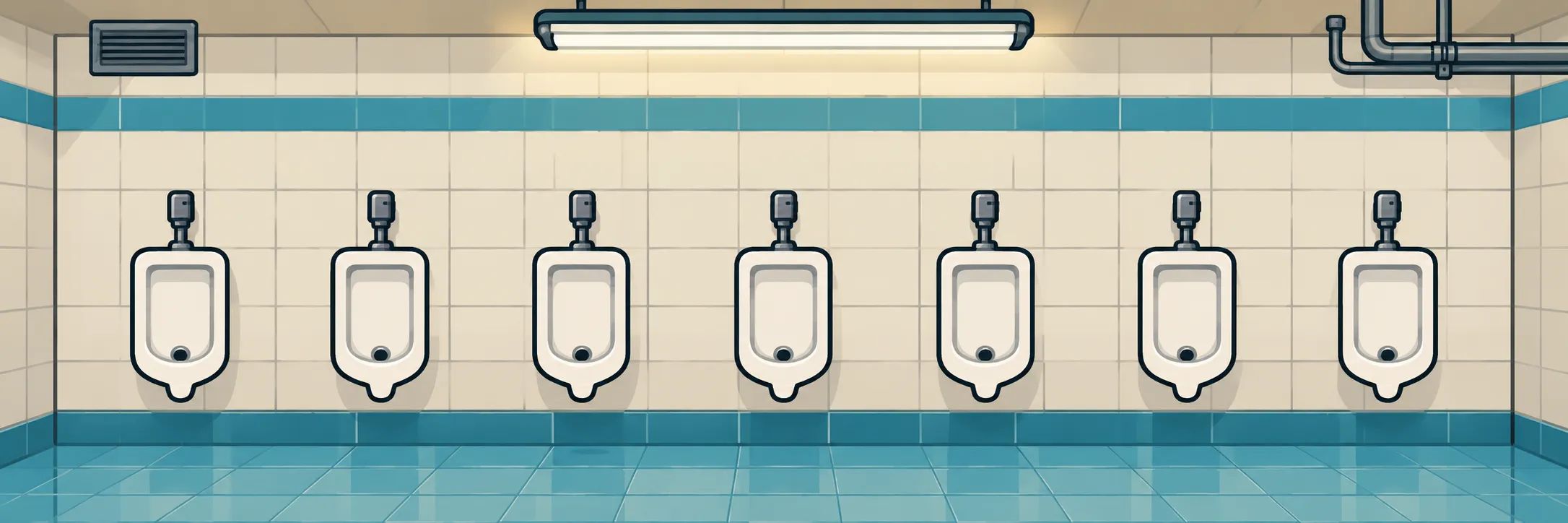
Every man knows the rule without being told it: if there’s a choice, you don’t take the urinal right next to someone. In 1976 three psychologists decided to find out whether that rule is only manners, or something your body enforces too.
The experiment
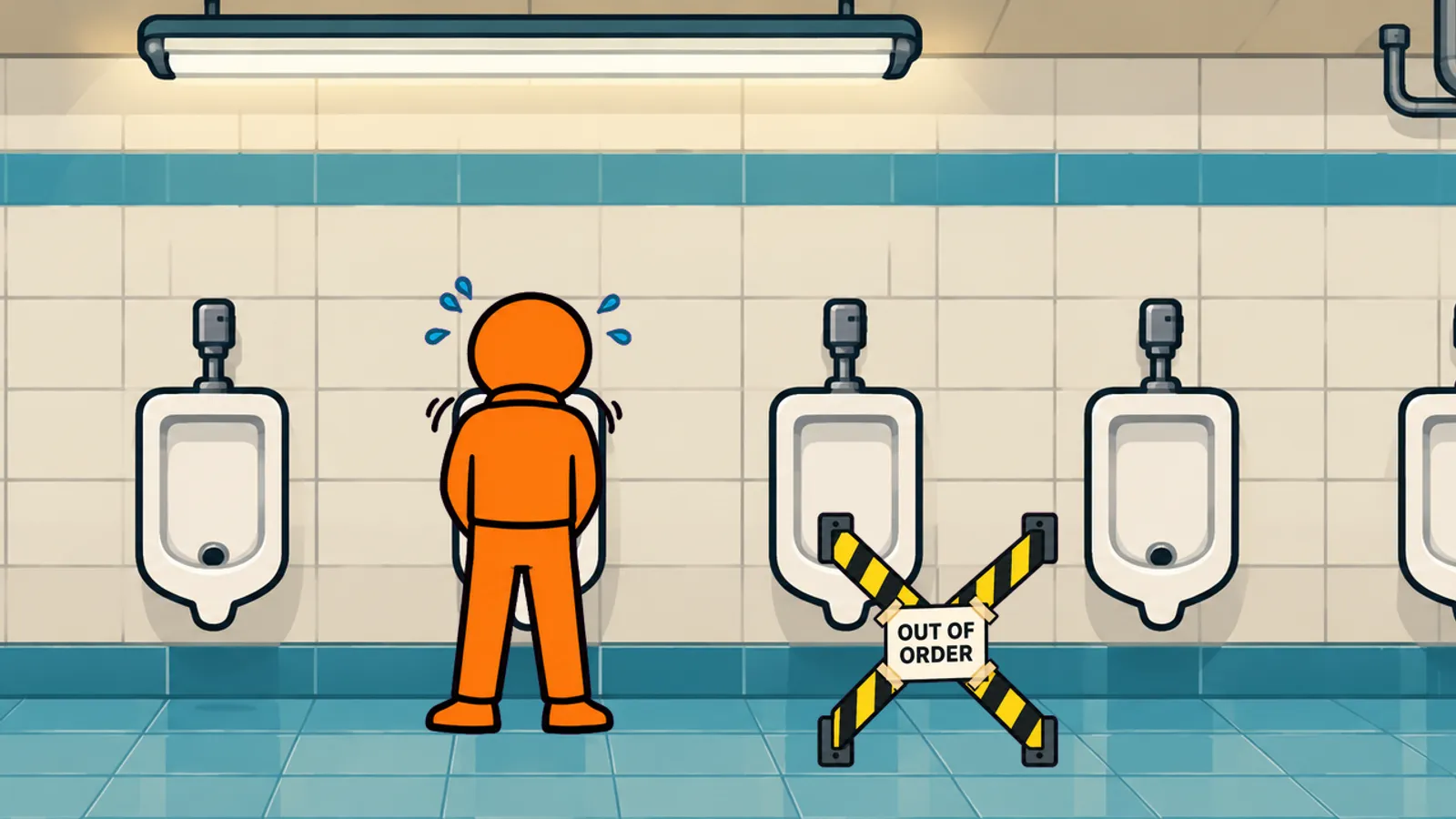
Dennis Middlemist, William Knowles and Charles Matter ran their study in a university men’s room with three urinals. Sixty men walked in to use it. Each one was steered, without knowing it, into one of three set-ups:
- a stranger (one of the researchers) standing at the very next urinal,
- the stranger standing one urinal away,
- nobody there at all.
Then they measured two things: how long it took each man to start, and how long he kept going.
What they found
The closer the stranger, the longer the delay before anything happened, and the shorter the stream once it did. The paper, published in the Journal of Personality and Social Psychology, called it “suggestive evidence for arousal”: a stranger in your personal space puts your body slightly on alert, and a body on alert doesn’t relax the muscles you need to pee.
In other words, the unwritten rule has a written reason. Leaving a gap isn’t only polite. It’s kinder to the bladder next to you.
How did they time it? According to teaching summaries of the study, an observer sat in a nearby stall with a periscope-style device. The study is now a standard ethics case in psychology courses: no consent, no debrief, and a periscope.
So what are the rules?
Science stops at one paper, and nobody has run the big study on which urinal men actually pick. The rest is folklore, refined over generations:
- Take the end if the room is empty. It leaves the most space for whoever comes next.
- Maximise the gap. Pick the urinal furthest from anyone already there.
- Never stand right next to someone when another option exists.
- Eyes forward. The wall is very interesting. Study it.
- No conversation beyond a nod, unless you arrived together and even then, keep it brief.
The xkcd blog famously showed that rule 1 and rule 2 can trap you: in some rows, being polite to the man already there forces the next man to stand next to someone. That puzzle is the whole idea behind Urinal Rules Forever: every room is a small logic problem with a social cost for getting it wrong.
Read the full code in The Unwritten Rules, or meet the men who make it hard in The Regulars.
Quick answers
Does standing next to someone at a urinal really make it harder to pee?
One 1976 study suggests yes. Men with a stranger at the next urinal took longer to start and finished sooner than men with nobody nearby.
Is there research on which urinal men choose?
Surprisingly little. The "pick the end, leave a gap" rule is folk wisdom; we found no large peer-reviewed study measuring it.
Sources