Peeing more at night? What your prostate might be telling you
Getting up at night to pee, a weak stream, or never quite finishing: the common signs of an enlarged prostate, what else they can mean and when to see a doctor.
If you’ve started to know your bathroom at 3 a.m. better than your bathroom at 3 p.m., this page is for you. Changes in how you pee are very common as men get older. They’re usually not serious, they’re often treatable, and they’re one of the best reasons there is to see a doctor.
Meet your prostate
The prostate is a gland about the size of a walnut that sits under the bladder and wraps around the tube you pee through (the urethra). It helps make semen. It also tends to grow with age, and because of where it sits, when it grows it can squeeze that tube.
The common signs
An enlarged prostate (doctors call it benign prostatic enlargement, BPE, or benign prostatic hyperplasia, BPH) is very common in men over 50 and is not cancer. Typical signs:
- getting up at night to pee, more than once,
- a weak or slow stream, or one that starts and stops,
- difficulty starting, or needing to strain,
- needing to go often, or suddenly and urgently,
- dribbling after you think you’ve finished,
- feeling that your bladder hasn’t fully emptied.
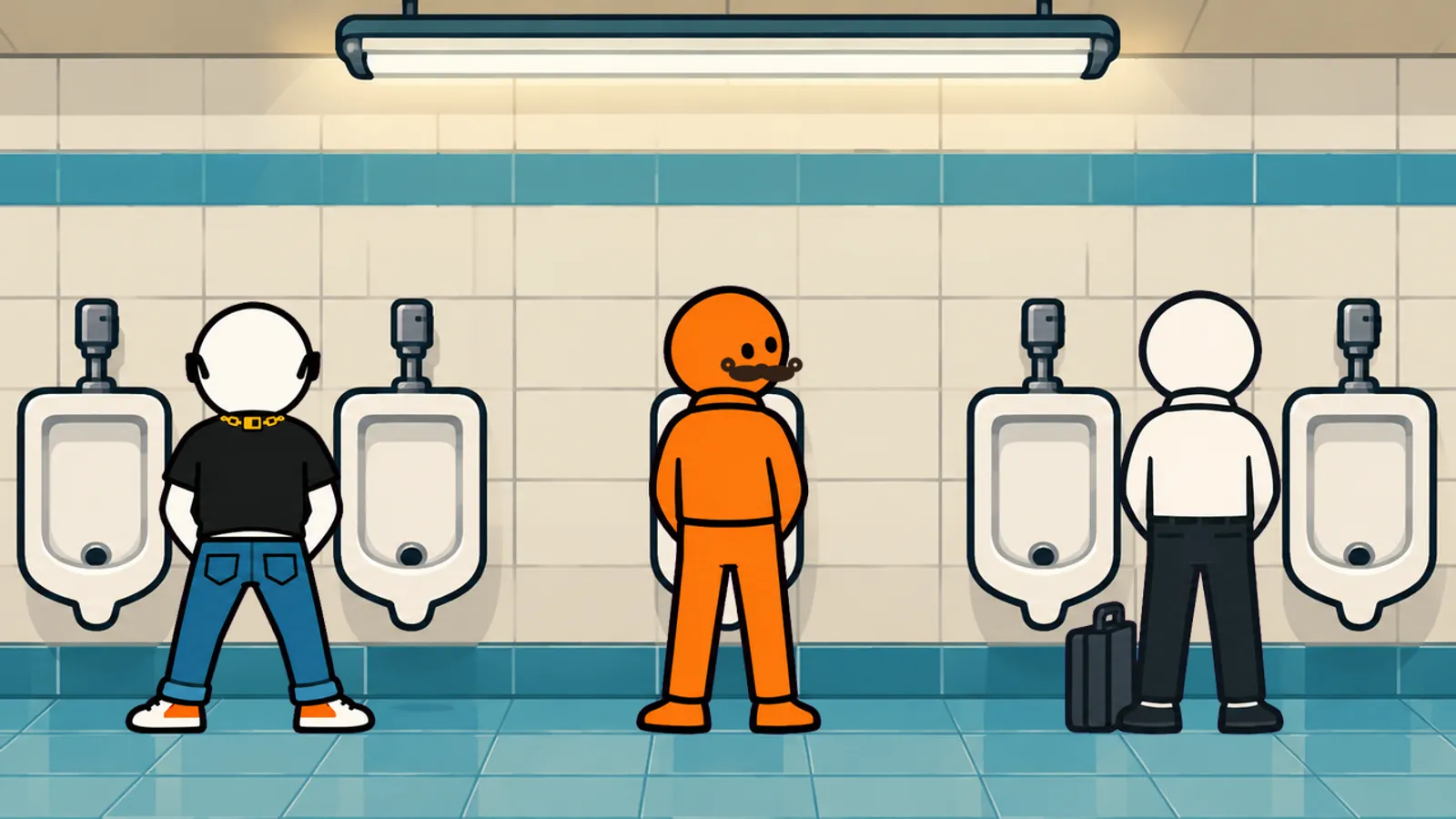
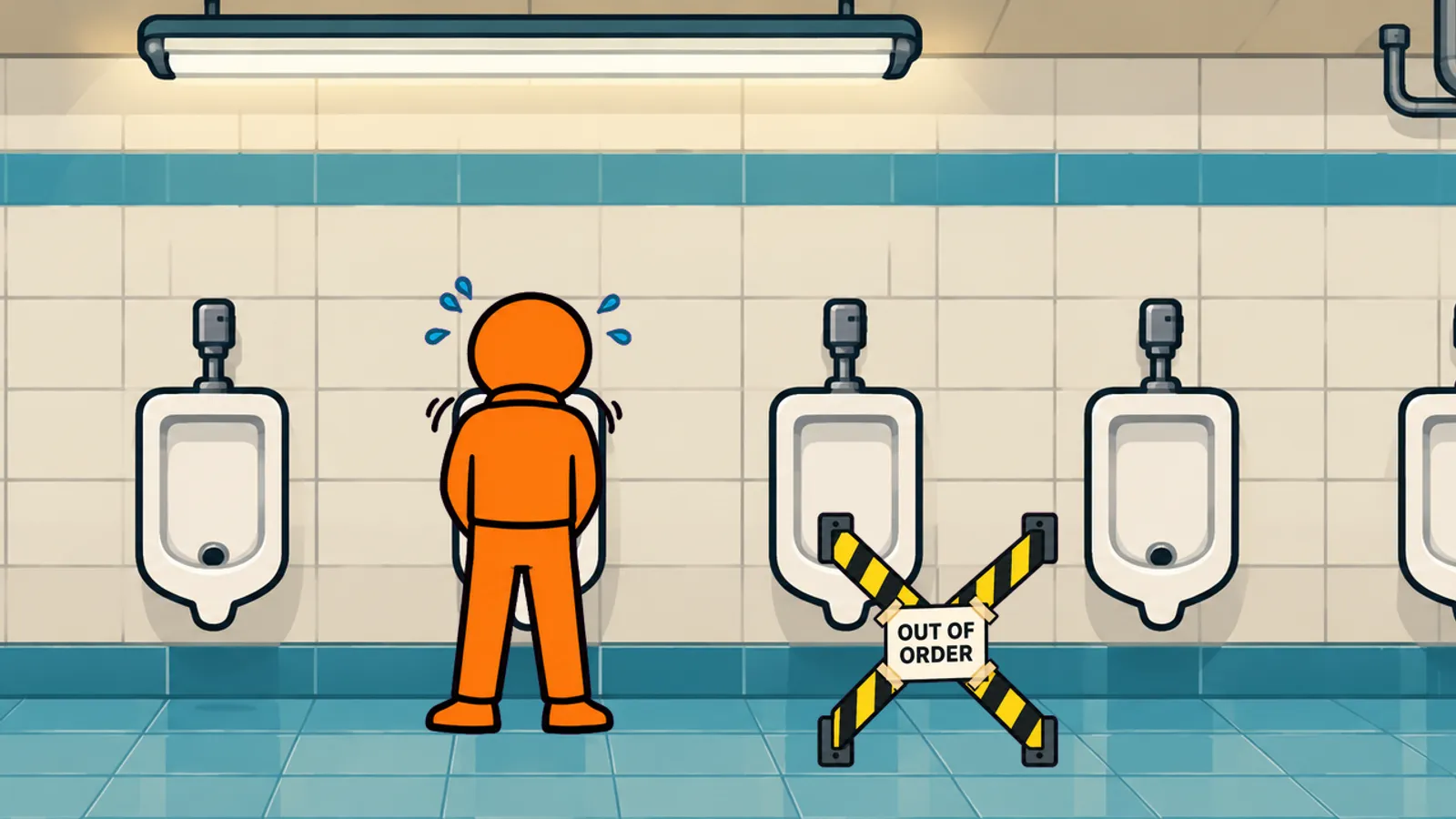
In urinal terms: if you’re now the man who is still standing there long after everyone else has left, it’s time to mention it to someone.
What else it could be
The same symptoms can come from other things too: a urinary infection, diabetes, some medicines, a lot of caffeine or alcohol, or simply drinking a lot late in the evening. That is exactly why it’s worth a check rather than a guess.
Prostate cancer, by contrast, often causes no symptoms at all in its early stages. That’s why your risk factors matter more than your symptoms.
Know your risk
Talk to your doctor about prostate cancer, even if you feel fine, if you are:
- over 50,
- Black and over 45, as Black men have a higher risk,
- someone whose father or brother has had prostate cancer.
Your doctor can talk you through the PSA blood test and whether it’s right for you.
See a doctor soon if
- there’s blood in your pee or semen,
- you can’t pee at all: this is an emergency, so get help straight away,
- peeing is painful, or you have a fever with urinary symptoms,
- your symptoms are getting in the way of sleep, work or travel.
What helps in the meantime
Small things genuinely help with mild symptoms: drink less in the two hours before bed, go easy on caffeine and alcohol, and take your time at the urinal. Your doctor may also suggest medicines that relax or shrink the prostate.
This is the least awkward conversation you’ll have about your bladder. Movember exists so men will have it.
This page is general information and not medical advice. If you’re worried about a symptom, see a doctor.
Quick answers
Is getting up at night to pee a sign of prostate cancer?
Usually not. It is most often caused by an enlarged prostate, which is common and not cancer, or by drinking late in the evening. It is still worth seeing a doctor so they can check.
What are the symptoms of an enlarged prostate?
Difficulty starting to pee, a weak or stop-start stream, straining, needing to go often or urgently, getting up at night, and feeling that your bladder has not fully emptied.
Who should talk to a doctor about prostate cancer testing?
Men over 50, Black men over 45, and men whose father or brother had prostate cancer should ask their doctor about their risk, even without symptoms.
Sources