Shy bladder (paruresis): why some men can’t pee when someone’s next to them
Can’t go at a urinal when someone is nearby? That’s paruresis, or shy bladder. How common it is, why it happens and what actually helps.
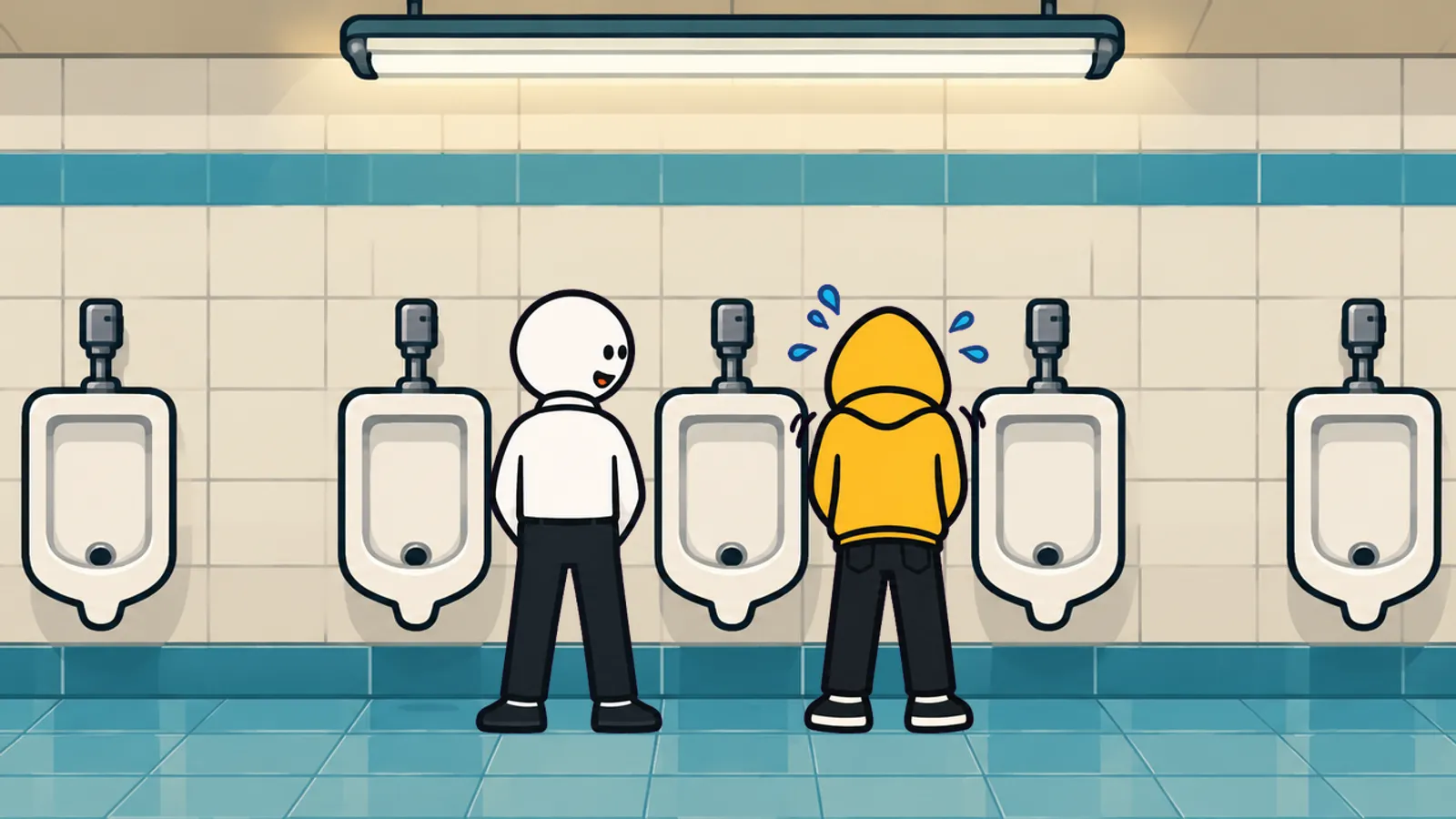
You walk in, you pick the right urinal, you stand there… and nothing. The man next to you finishes and leaves. Then it starts. If that’s familiar, you’re in good company, and it has a name.
What it is
Paruresis, or shy bladder, is difficulty peeing when other people are around, or when you think they might hear you or be waiting. For some men it only happens at a busy urinal. For others it means avoiding public toilets altogether, which can quietly shape travel, work and social life.
It’s a recognised form of social anxiety, not a problem with your bladder. Your body is working fine. It just doesn’t feel safe enough to let go.
Why it happens
To pee, a ring of muscle has to relax. Stress does the opposite. When part of your brain decides the situation is tense, it keeps that muscle tight, and trying harder makes it worse.
A 1976 study showed the effect in ordinary men: with a stranger at the next urinal, they took noticeably longer to start. Paruresis is that same reflex, turned up.
How common is it?
Nobody quite agrees, because studies define it differently:
- a large random survey in Germany put it at about 2.6% of people,
- support organisations often quote around 7%,
- a 2024 UK university survey found about a quarter of respondents reported mild symptoms and around 15% severe ones, though that sample wasn’t representative.
The honest answer: severe shy bladder is uncommon, and a mild version is extremely common. You are not the only one standing there.
What helps
In the moment:
- Use a cubicle. There’s no rule that says you have to use the urinal.
- Breathe out slowly and let your stomach relax. Count your breaths, not the seconds.
- Take your attention elsewhere: read the tiles, do some mental arithmetic.
- Don’t force it. If it isn’t happening, wash your hands and try again a little later.
Longer term:
- Graded exposure, often as part of cognitive behavioural therapy (CBT), has the best track record. You practise in easier situations first (an empty toilet, a trusted friend outside) and work up gradually.
- Support groups and workshops, like those from the UK Paruresis Trust, help a lot of people, not least because they meet others who have the same problem.
- Talk to your doctor, especially to rule out physical causes if you also have trouble peeing when you’re alone.
When it’s not shy bladder
If you struggle to pee when nobody is around, have a weak stream, or keep getting up at night, that’s a different conversation: read Peeing more at night?. If you suddenly can’t pee at all, get medical help straight away.
In Urinal Rules Forever, the Shy character only gets a Perfect with a gap of two or more urinals, and loses it if the door opens. We made him that way because a lot of you are him.
This page is general information and not medical advice. If you’re worried about a symptom, see a doctor.
Quick answers
What is paruresis?
Paruresis, or shy bladder syndrome, is difficulty or inability to pee when other people are nearby, or when you think they might hear or be waiting. It is a recognised form of social anxiety.
How common is shy bladder?
Estimates vary a lot depending on how it is defined: from around 3% in a large German population survey to roughly 7% often quoted by support groups. Milder versions are far more common.
Can paruresis be treated?
Yes. Graded exposure, usually as part of cognitive behavioural therapy, has the best track record. Support groups and workshops can help too.
Sources